You love a warm cup of tea, but that 6 pm cup sometimes leaves you wide awake at midnight. So you start looking for something gentler, something with the comfort of tea and less of the caffeine. Roselle tea, with its deep ruby colour, often comes up.
So, is roselle tea caffeine-free? Pure roselle tea is. It is made from the dried calyces of Hibiscus sabdariffa, not from the leaves of the traditional tea plant, and that plant is where the caffeine in regular tea comes from. The catch is the word “pure”. Some products sold as roselle or hibiscus tea are blends, and a blend can contain caffeine depending on what else is in it.
This guide explains why roselle is naturally caffeine-free, how it compares with green and black tea, and how to read a label so you know what you are buying.
What Is Roselle Tea?
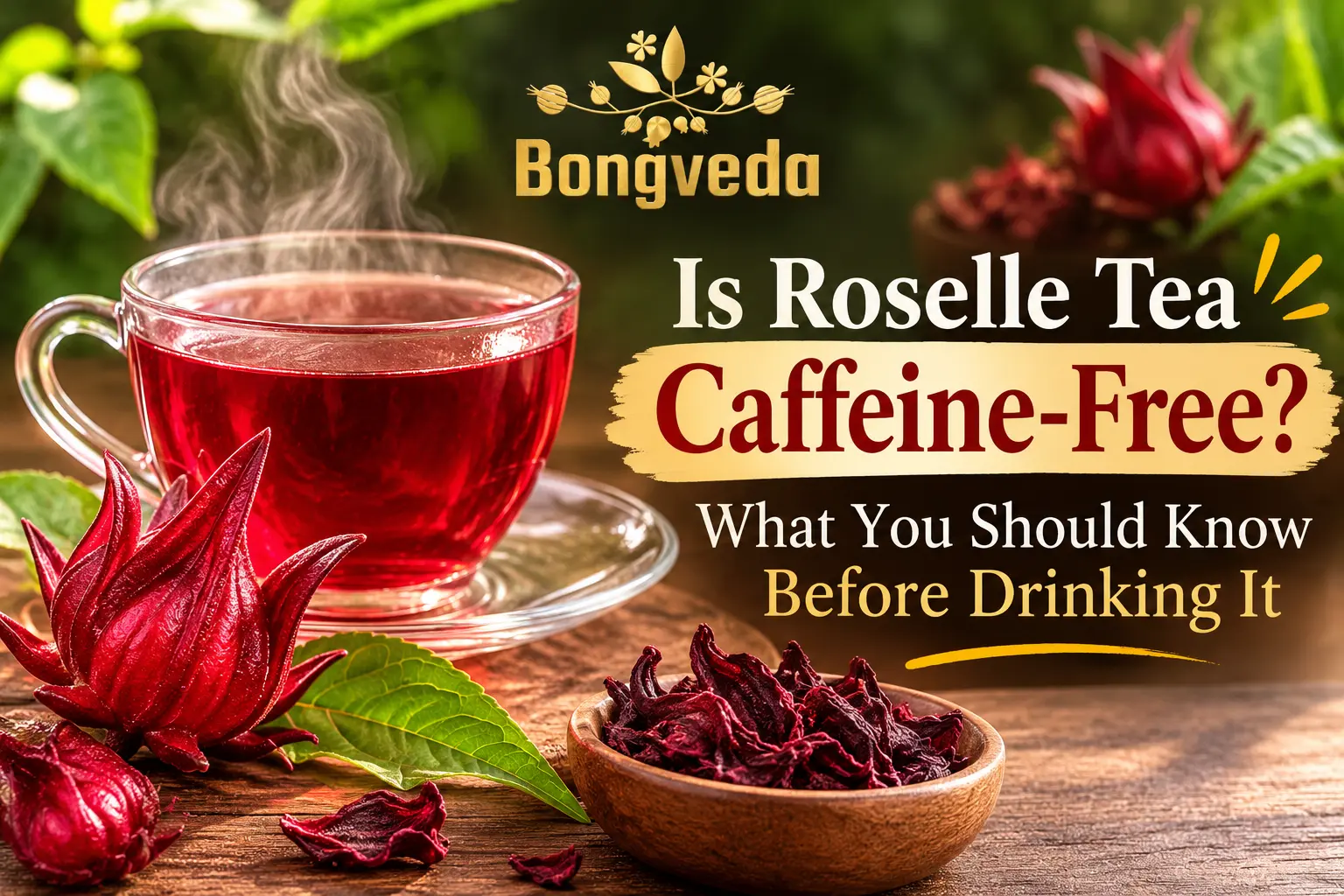
Roselle tea is an herbal infusion made from the calyces of Hibiscus sabdariffa. The calyx is the fleshy, cup-like part that surrounds the flower’s seed pod. Once harvested, the calyces are dried and steeped in water.
Three things make it easy to recognise:
- Colour: a deep ruby red
- Flavour: naturally tart and fruity
- Versatility: it works as a hot drink or a chilled one
Roselle belongs to the Hibiscus genus, but it is botanically different from Camellia sinensis, the plant behind green tea, black tea, white tea and oolong. In everyday language the word “tea” covers both, but they come from entirely different plants.
If you are new to this herbal infusion, read our Complete Guide to Roselle Tea for Beginners to learn more about its ingredients, flavour and preparation.
Why Is Pure Roselle Tea Naturally Caffeine-Free?
It comes down to the plant.
Green tea and black tea are both made from the leaves of Camellia sinensis. That plant naturally contains caffeine, so the teas made from it do too. The differences between green and black tea come from how the leaves are processed, not from a different plant.
Pure roselle tea is made from Hibiscus sabdariffa calyces. Roselle is not a caffeine-containing plant, so a tea made only from its calyces has no natural caffeine.
This applies to pure roselle tea, not to every product that mentions hibiscus or herbal tea on its packaging. A blend that adds a caffeinated ingredient is a different drink. We also won’t quote an exact caffeine number here, because the claim that matters is about the ingredient, not about a lab figure for any particular product.
Roselle Tea vs Green Tea vs Black Tea: Caffeine Comparison
Here is how roselle sits next to other common cups:
| Tea type | Main plant ingredient | Natural caffeine |
|---|---|---|
| Pure roselle tea | Hibiscus sabdariffa calyces | Naturally caffeine-free |
| Green tea | Camellia sinensis leaves | Contains caffeine |
| Black tea | Camellia sinensis leaves | Contains caffeine |
| Pure peppermint infusion | Peppermint leaves | Naturally caffeine-free |
| Pure chamomile infusion | Chamomile flowers | Naturally caffeine-free |
The caffeine in green and black tea is not a fixed amount. It varies with the tea variety, the serving size, the water temperature and how long the leaves steep. That is why two cups of black tea can feel quite different.
Herbal blends need the same care. A blend that includes green tea, black tea or another caffeinated ingredient will contain caffeine, even if the box looks “herbal”.
Want a closer side-by-side? See our guide on Roselle Tea vs Green Tea.
Can You Enjoy Roselle Tea at Night?
Because pure roselle tea is naturally caffeine-free, many people choose it as an evening drink. It is a simple way to keep a tea habit going after dinner without adding caffeine.
A few easy ways to enjoy it:
- A warm cup as part of an unhurried evening break
- A chilled glass over ice when you want something refreshing
- Plain or adjusted to taste, with a little honey, mint or lemon if you like
If avoiding caffeine matters to you, check the ingredient list first. And to be clear, we are not saying roselle tea helps with sleep or has a calming effect. It simply does not contain natural caffeine. If you have dietary restrictions or medical advice that applies to you, follow that rather than a general beverage suggestion.
Does Adding Other Ingredients Change Roselle Tea’s Caffeine Content?
Yes, it can. What goes into the blend decides the result. These are general ingredient examples, not descriptions of specific Bongveda products:
- Roselle with peppermint: if both ingredients are pure, the blend is naturally caffeine-free.
- Roselle with ginger: a blend using only these two ingredients is naturally caffeine-free.
- Roselle with green tea: the blend contains caffeine.
- Roselle with black tea: the blend contains caffeine.
This is why the complete ingredient list matters more than the front of the pack. A bright label and the word “herbal” tell you about the style of the product, not about what is inside it.
How to Identify Caffeine-Free Roselle Tea When Buying
Use this quick checklist next time you are comparing products:
- Botanical name: look for Hibiscus sabdariffa to confirm you are buying roselle.
- Complete ingredient list: check whether the product contains only roselle or other ingredients too.
- Tea blends: look for green tea, black tea or any other caffeinated ingredient.
- Product description: make sure it matches the actual ingredient information.
- Preparation instructions: follow the manufacturer’s brewing recommendations.
- Packaging information: review freshness, storage instructions and relevant date details.
Remember that “herbal” on its own does not guarantee a product is caffeine-free. The ingredient list is the part to trust.
How to Prepare Roselle Tea
Roselle tea is simple to make at home.
You will need:
- Dried roselle calyces or a roselle tea product
- Fresh water
- Optional honey, mint or lemon
Method:
- Heat fresh water.
- Add the roselle according to the product instructions.
- Let it steep until it reaches the strength you like.
- Strain if you are using loose dried calyces.
- Enjoy warm, or let it cool and serve over ice.
Roselle is naturally tart. If it tastes too sharp, use a little less or steep it for a shorter time. If you want it bolder, do the opposite. Honey, mint or lemon will not change the natural caffeine status of pure roselle, though adding a caffeinated tea ingredient would.
Explore Bongveda Roselle Tea
If you are looking for a naturally caffeine-free herbal infusion, you can explore Bongveda Roselle Tea. Review the available ingredient information and preparation instructions to understand whether the product suits your preferences.
Frequently Asked Questions
Is roselle tea completely caffeine-free?
Pure roselle tea made from Hibiscus sabdariffa calyces is naturally caffeine-free. Blends that include caffeinated ingredients may differ.
Does roselle tea contain more caffeine than green tea?
No. Pure roselle tea contains no natural caffeine, whereas green tea naturally contains caffeine.
Can I drink roselle tea at night?
Pure roselle tea is naturally caffeine-free, so some people enjoy it in the evening. Personal preferences and dietary considerations still matter.
Is hibiscus tea caffeine-free?
Tea made purely from roselle (Hibiscus sabdariffa) is naturally caffeine-free. Products marketed as hibiscus tea can be blends, so always check the ingredient list.
Does adding honey or lemon add caffeine to roselle tea?
No. Honey and lemon do not naturally contain caffeine. Other added tea ingredients, such as green or black tea, can change the caffeine content.
Is roselle tea the same as green tea?
No. Roselle is an herbal infusion made from Hibiscus sabdariffa, while green tea is made from the leaves of Camellia sinensis.
Conclusion
So, is roselle tea caffeine-free? When it is pure roselle, yes. It comes from Hibiscus sabdariffa calyces rather than Camellia sinensis leaves, which makes it an option for people who enjoy herbal infusions without the natural caffeine found in green and black tea.
Blended products can be different, so the ingredient label is your best guide. Check it before you buy, and when you are ready, explore Bongveda Roselle Tea.