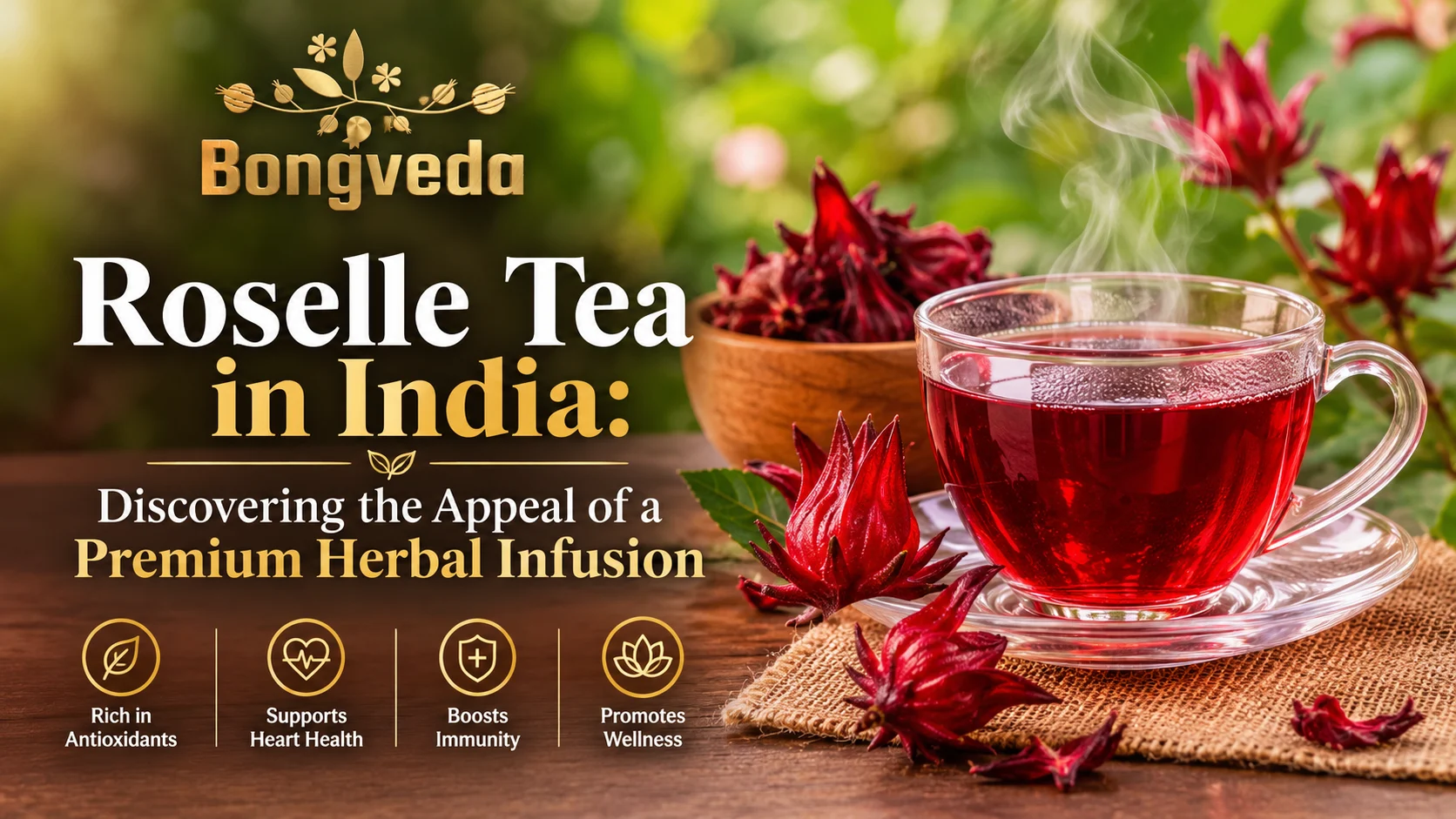
Walk into any Indian kitchen and you will find more than one idea of what a warm or cold drink can be. There is masala chai, of course, but also tulsi leaves steeped in hot water, a jar of jeera water on the counter, a sherbet made from bael or kokum for summer afternoons. Plant-based drinks are woven into everyday life here, and it is no surprise that more people are now looking beyond the usual cup and exploring botanical infusions with a character of their own.
Roselle tea is one of the most visually and sensorially distinctive of these. It pours a deep ruby red, tastes pleasantly tart, and works equally well hot or over ice. For readers who already know the basics, this article takes a different route: instead of defining roselle tea from scratch, it looks at what makes a premium herbal infusion worth choosing, how to read labels on words like "organic" and "Ayurvedic", and how roselle tea fits into everyday tea rituals in India.
India's Growing Interest in Herbal Tea and Botanical Infusions
India has a long relationship with plants in a cup. Regional traditions use leaves, flowers, roots, seeds and spices, and each brings its own aroma and flavour. Modern tea shops and online stores have widened the choice further, so a curious drinker can now compare chamomile, lemongrass, mint, butterfly pea flower, hibiscus varieties and many other infusions side by side.
What draws people to these drinks is often simple and sensory rather than technical:
- Distinct flavour. A good herbal infusion tastes like itself, whether floral, citrusy, minty or tart.
- Aroma and colour. The drink is part of the pleasure, from the steam rising off a hot cup to the colour of a chilled glass.
- A different pace. Many people enjoy herbal infusions as an alternative to conventional tea and coffee, particularly in the evening.
- Room to experiment. Herbal infusions are easy to personalise with citrus, herbs or spices.
This interest in variety is exactly where roselle tea finds its audience.
Introducing Roselle Tea as a Distinctive Herbal Beverage
Roselle is the common name for Hibiscus sabdariffa. The infusion is made from the plant's fleshy calyces, the part that surrounds the flower, which are dried and then steeped in water. Two features define the drink straight away:
- A naturally tart, refreshing flavour, often compared to cranberry or pomegranate.
- A characteristic ruby-red colour, which comes from the calyces themselves.
It is equally at home as a hot cup or a chilled drink, which makes it unusually flexible across seasons. If you are new to the plant and want a ground-up introduction, Bongveda's beginner's guide to roselle tea covers the fundamentals. Here, we will focus on the questions that come up once you are past the basics.
What Makes Roselle Tea Appealing to Premium Herbal Tea Enthusiasts?
The word "premium" appears on a great many tea packets. A useful way to cut through it is to look for qualities you can actually check, rather than adjectives on the front of the pack.
Flavour profile. Roselle should taste clean, bright and tart, not flat, musty or overly dusty. Well-handled calyces tend to deliver a vivid taste even when brewed simply.
Appearance and natural colour. A good infusion has a rich red hue that comes from the plant. Be cautious of colour that looks unnaturally intense without any explanation on the label.
Ingredient transparency. The pack should clearly state what is inside. A pure roselle tea should list roselle and nothing else, and a blend should name every component.
Freshness and storage. Dried botanicals keep best when protected from moisture, light and air. Look for packaging that seals well, and store the tea in a cool, dry place once opened.
Consistency of preparation. A premium product should come with clear brewing guidance so that the second cup tastes like the first. If you want a reference point, the roselle tea brewing and buying guide walks through preparation and what to look for when buying.
Clear product descriptions and packaging. Net quantity, ingredients, storage advice and manufacturer details should all be easy to find.
The common thread is that premium quality is best judged through verifiable product characteristics. Strong claims without supporting detail are a reason to look more closely, not a reason to buy.
The Appeal of Naturally Caffeine-Free Herbal Infusions
Another reason people explore roselle tea is that they want a flavourful drink without caffeine. A pure roselle infusion, prepared only from roselle calyces, is naturally caffeine-free because the plant does not contain caffeine in the way that Camellia sinensis (true tea) does.
The important word there is pure. Many products sold as "roselle tea" or "hibiscus tea" are actually blends. Some include green tea, black tea or other caffeine-containing ingredients, and the caffeine content of the cup then depends on the mix. The ingredient list is the only reliable way to tell.
It is also worth keeping expectations realistic. Choosing a caffeine-free drink simply means there is no caffeine from the plant itself; it does not mean the drink will improve sleep or deliver any particular health outcome. If this is the question you are trying to answer, our short explainer, is roselle tea caffeine-free?, goes into it in more detail, and understanding pure roselle tea and blends explains how to tell the two apart on a label.
Organic Roselle Tea: Understanding Labels and Authenticity
Searches for organic roselle tea have grown alongside general interest in organic food, and it helps to understand what the word actually signifies.
- "Organic" is a regulated term, not a style. In India, organic claims on food products are expected to be backed by recognised certification, such as the National Programme for Organic Production (NPOP) or the FSSAI's organic labelling framework. Look for the relevant certification mark and details on the pack.
- Certification is different from "natural" marketing. Phrases like "farm fresh", "pure nature" or "chemical-free" are descriptive language and are not the same thing as a certified organic product.
- Ingredient transparency still matters. An organic label tells you about how the ingredient was grown and handled; the ingredients list tells you what is in the pack. You need both.
- Read the product itself. Rely on what is printed on the actual label and on the brand's own documentation, not on advertising language or social media captions.
In practice, if a brand calls its product organic, it should be able to show you the certification behind it. If you cannot find it, treat the claim as unverified.
Roselle Tea and Ayurvedic Tea in India: Understanding the Difference
Searches for Ayurvedic tea in India are common, and roselle often appears in them, so it is worth clearing up a frequent confusion. Three different things tend to get lumped together:
- Botanical herbal infusions. Drinks made by steeping a single plant or a simple mix of plants in hot water. Roselle tea sits here.
- Traditional Ayurvedic formulations. Preparations made according to classical Ayurvedic texts and methods, with defined ingredients and processes.
- Products marketed as Ayurvedic beverages. Commercial drinks that use the word Ayurvedic on the pack, which may or may not follow a classical formulation.
A drink made from roselle is a botanical herbal infusion. That does not automatically make it an Ayurvedic formulation, and it should not be described as one without proper basis. When you see "Ayurvedic" on any tea, look at the full ingredient list, ask what formulation it follows, and be cautious about claims that promise specific medicinal outcomes. Good brands explain what their product is and what it is not.
Exploring Roselle Tea as Part of Everyday Tea Rituals
One of roselle tea's strengths is how easily it fits into routines you already have. A few serving ideas:
- A warm afternoon infusion. Steep the calyces in hot water and enjoy it slowly as a caffeine-free pause in the day.
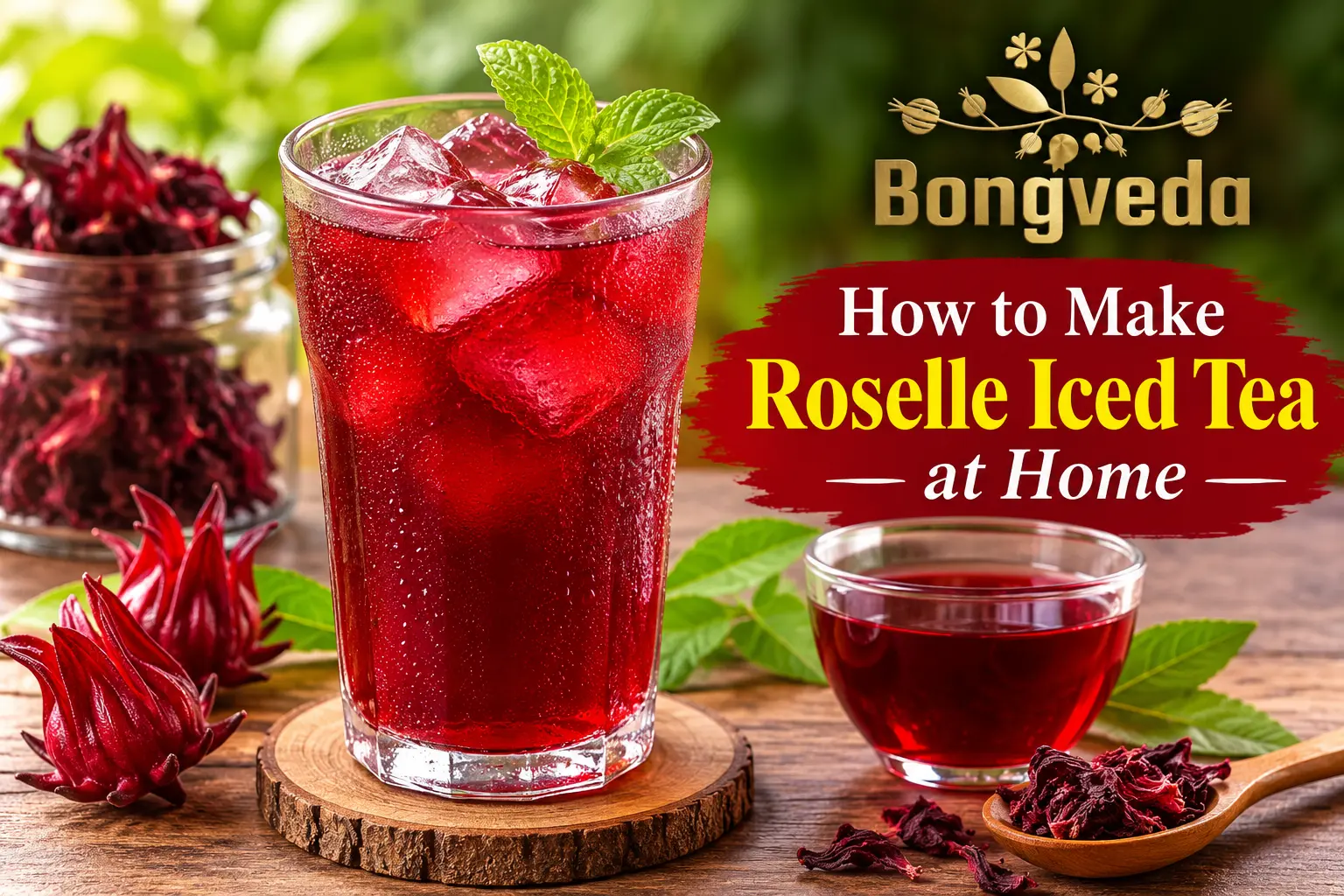
- A chilled drink in warmer weather. Brew it, let it cool, and serve over ice. The tartness is especially welcome in summer. Our guide to making roselle iced tea at home covers this in more detail.
- Unsweetened, for those who like tartness. Some people prefer the natural sharpness without any sweetener at all.
- A customised cup. A slice of lemon, a few mint leaves or a thin piece of ginger can each shift the flavour in a different direction.
These are serving suggestions to help you enjoy the drink, not health recommendations. Start with a lighter brew and adjust to taste.
Discovering Bongveda Roselle Tea
Bongveda is built around a single focus: roselle tea. Rather than offering a long catalogue of unrelated products, the brand concentrates on one infusion and on helping people understand it, from how it is made to how it is brewed and bought.
If you are interested in exploring roselle tea, discover Bongveda Roselle Tea and learn more about the product, its ingredients and preparation. As with any product you consider, we encourage you to read the label and product page carefully and compare what is stated there with what you are looking for.
Frequently Asked Questions
What is roselle tea called in India?
Roselle (Hibiscus sabdariffa) is known by different names across India and the world, and regional names often refer to the plant or its leaves as much as to the tea. Internationally, the infusion is commonly sold as roselle tea or hibiscus tea. If you are comparing products, check the ingredient list for Hibiscus sabdariffa or roselle calyces.
Where can I buy roselle tea in India?
Roselle tea is available through specialty tea sellers, online marketplaces and brand websites. Wherever you buy, look for a clear ingredient list, net quantity, storage advice and manufacturer details. You can also explore the product on Bongveda's official website.
What makes premium roselle tea different?
Premium roselle tea is best judged by qualities you can verify: a clear and vivid flavour, natural colour, transparent ingredients, careful packaging and clear brewing instructions. Words like "premium" on their own are not proof of quality.
Is organic roselle tea different from regular roselle tea?
"Organic" refers to how the ingredient is grown and handled, and a genuine organic claim should be supported by recognised certification shown on the pack. It does not change the fact that the product is roselle tea, and "natural" on a label is not the same as certified organic.
Is roselle tea an Ayurvedic tea?
Roselle tea is a botanical herbal infusion. That alone does not make it a traditional Ayurvedic formulation, so check what a product actually claims and what its ingredients are before treating it as one.
Is pure roselle tea naturally caffeine-free?
Yes, a pure infusion made only from roselle calyces is naturally caffeine-free. Blends that include green tea, black tea or other caffeine-containing ingredients are different, so check the ingredient list.
Can roselle tea be enjoyed every day?
Many people enjoy herbal infusions regularly, but there is no universal quantity that suits everyone. Individual circumstances matter, including any medication you take or health conditions you have, so if you are unsure, it is sensible to speak to a doctor or qualified healthcare professional before making it a daily habit.