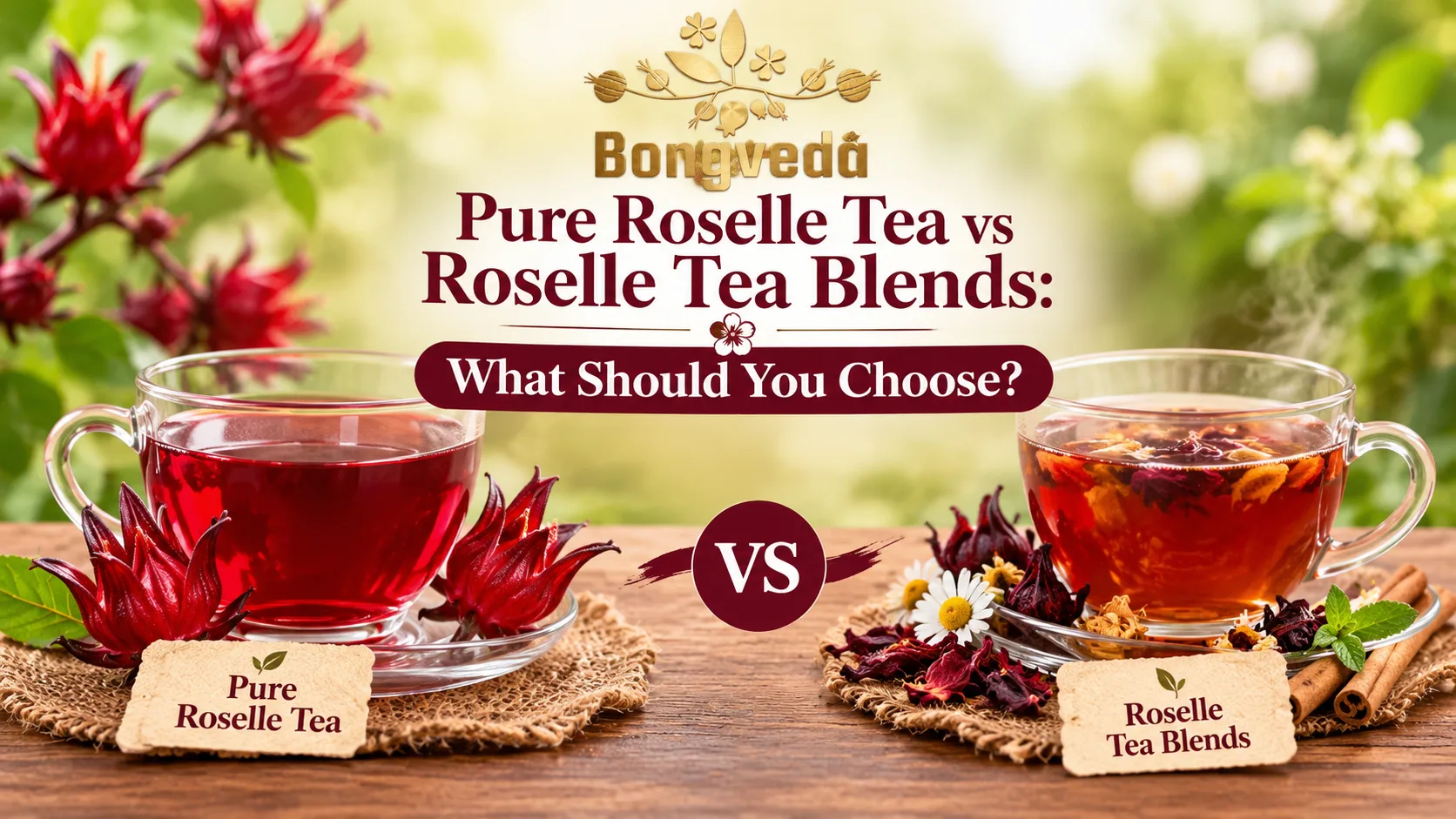
Imagine you’re shopping for roselle tea online. You open two tabs. Both packets show the same deep ruby-red infusion in a glass. One ingredient list is a single line. The other runs to several lines of herbs and spices.
Both are sold as roselle tea, and both can make a lovely cup. But they are different products. If you’re trying to find pure roselle tea, or just trying to understand what you’re buying, the ingredient list tells you more than the front of the packet.
This guide explains the difference between single-ingredient roselle tea and roselle blends, how extra ingredients change the cup, and what to check before you buy.
What Is Pure Roselle Tea?
Roselle tea is usually made from the dried calyces of Hibiscus sabdariffa. The calyx is the fleshy, cup-like part that wraps around the base of the flower. Once dried, it steeps into a bright ruby-red infusion with a naturally tart, fruity taste, a bit like cranberry.
It is commonly brewed with hot water, steeped for a few minutes and strained. Some people also cool it and serve it over ice. If you’re new to the plant itself, our Complete Guide to Roselle Tea for Beginners covers the basics.
“Pure roselle tea” generally means roselle is the only tea ingredient. That’s how the term is usually understood, but it isn’t a regulated label. Always check the actual ingredient list rather than trusting the product name. A pack called “pure roselle flower tea” should list roselle (or Hibiscus sabdariffa) and nothing else.
What Are Roselle Tea Blends?
A roselle blend combines roselle with other ingredients. Common partners include:
- Mint, for a cool, fresh aroma
- Ginger, for warmth and a gentle spicy edge
- Lemongrass, for a citrus-like fragrance
- Other herbs, spices or fruit ingredients, depending on the maker’s recipe
These additions change the aroma, flavour and sometimes the colour of the infusion. A blend isn’t a lesser version of a single-ingredient tea. It’s a different drink, built on purpose. Think of it as the difference between a plain black coffee and a spiced latte. Neither is wrong, but you should know which one you ordered.
Pure Roselle Tea vs Roselle Tea Blends: Key Differences
| Feature | Pure roselle tea | Roselle tea blend |
|---|---|---|
| Main ingredients | Roselle as the sole tea ingredient | Roselle combined with other ingredients |
| Flavour | Characteristically tart and fruity | Depends on the additional ingredients |
| Aroma | Primarily associated with roselle | May include minty, spicy, citrusy or floral notes |
| Ingredient list | Usually simpler | Usually contains multiple ingredients |
| Preparation | Depends on the product’s instructions | May vary according to the ingredients |
| Buying consideration | Check the roselle ingredient and product details | Review every ingredient in the blend |
These are general patterns, not guarantees. A single product can break any of them, which is why the label matters.
How Do Additional Ingredients Change the Taste?
Roselle is bold on its own, so what you pair it with makes a noticeable difference.
Roselle and mint
Mint brings a cooling freshness that softens the sharp edge of roselle’s tartness. It works especially well served chilled.
Roselle and ginger
Ginger adds a warm, slightly peppery note. The result is cosier and more rounded, which suits a hot cup on a cool evening.
Roselle and lemongrass
Lemongrass adds a citrus-like aroma. Because roselle is already tart, the two together can taste bright and lively.
Roselle and fruit ingredients
Fruit pieces or fruit-derived ingredients can add sweetness or extra fruity notes. The effect depends entirely on the formulation, so read what’s actually in the pack.
None of this is about medical effects. It’s simply about what you’ll taste and smell.
Why Should You Read the Ingredient Label?
A product name and a nice photograph are marketing. The ingredient list is information. When you compare roselle tea products, check:
- Whether roselle is the only tea ingredient
- Whether other herbs or spices are included
- Whether added flavours or sweeteners appear
- Whether the botanical name Hibiscus sabdariffa is given
- Whether the product description matches the ingredient list
- Whether preparation and storage instructions are provided
Naming can be confusing. Products labelled “hibiscus tea” may use different naming conventions, and the botanical name helps clarify what’s inside. If you want to untangle the two terms, read our guide to Roselle Tea vs Hibiscus Tea: Are They the Same?.
If you want to buy pure roselle tea specifically, this is the habit that protects you: don’t stop at the title, read the list.
Which One Should You Choose?
Neither option is automatically better. It comes down to taste and what you want from your cup.
Pure roselle tea may suit you if you:
- Like the distinctive tart flavour of roselle
- Want to know exactly which tea ingredient you’re drinking
- Prefer a simpler ingredient list
- Enjoy adding your own touches, such as a slice of lemon, a little honey or ice
A roselle blend may suit you if you:
- Enjoy mixed herbal flavours
- Prefer minty, spicy, citrusy or floral notes
- Like a ready-made flavour combination
- Want to explore different herbal infusion profiles
How to Choose Quality Roselle Tea
Whichever style you prefer, this checklist helps you compare products fairly:
- Ingredient transparency: Does the product clearly list everything in it?
- Botanical identification: Look for Hibiscus sabdariffa where relevant.
- Product description: Does it match the ingredient list?
- Packaging: Is it intact and suitable for protecting dried ingredients?
- Freshness information: Check the best-before date and storage instructions.
- Preparation guidance: Are there clear brewing recommendations?
- Personal preference: Does the flavour profile appeal to you?
Price alone doesn’t tell you much about quality. A clear label, sensible packaging and honest description tell you more.
Explore Bongveda Roselle Tea
If you’re curious about a ready-made roselle blend, take a look at Bongveda Roselle Tea. It’s a good example of why reading the label matters.
According to the product page, Bongveda’s Roselle Brew isn’t a single-ingredient tea. It lists 14 ingredients, including roselle flower (Hibiscus sabdariffa), palm candy, black salt, moringa leaf, tulsi, ginger, clove, cardamom, cinnamon, ajwain, fennel seeds, fenugreek, black cumin and black pepper. That makes it a spiced herbal blend with roselle as one component, so expect a warmer, more savoury-spiced cup than plain roselle.
The page describes two ways to prepare it. With a tea bag, use one bag in 120 ml of hot water (90–95°C) and steep for 2–3 minutes. With the jar, use 1–2 teaspoons in 100–120 ml of hot water and steep for 2–3 minutes before straining. You can enjoy it hot or over ice.
Review the product details and ingredient list to see whether it matches the kind of cup you’re looking for.
Frequently Asked Questions
What is pure roselle tea?
It generally refers to an infusion made with roselle as its sole tea ingredient, commonly the dried calyces of Hibiscus sabdariffa.
Is pure roselle tea better than a roselle blend?
Neither is universally better. The right choice depends on the flavour you want and how much you care about a short ingredient list.
Can roselle tea contain other herbs?
Yes. Some products combine roselle with mint, ginger, lemongrass or other ingredients. Check the label to see what’s actually in the blend.
How can I identify pure roselle tea?
Look for a clearly stated ingredient list that names roselle or Hibiscus sabdariffa as the only tea ingredient.
Does adding mint or ginger change the taste of roselle tea?
Yes. Each adds its own aroma and flavour, which changes the overall character of the infusion.
What should I check before buying roselle tea?
Review the ingredient list, botanical name, product description, packaging, freshness information and brewing instructions.
Conclusion
The main difference is simple. Pure roselle tea gives you the characteristic tart, fruity flavour of roselle on its own, while blends add other ingredients and create different flavour combinations. Both have a place, depending on what you enjoy.
What matters most is checking ingredient lists and product descriptions instead of relying on names or packaging. Once you know what’s in the pack, choosing becomes easy, whether you want pure roselle tea or a blend. When you’re ready to explore, you can view Bongveda Roselle Tea and read its ingredient details for yourself.