The Fascinating Colours Hidden in Herbal Tea
Pour hot water over dried chamomile and you get a soft gold. Do the same with dried roselle calyces and the water turns a deep ruby within minutes. Same kettle, same glass, completely different cup.
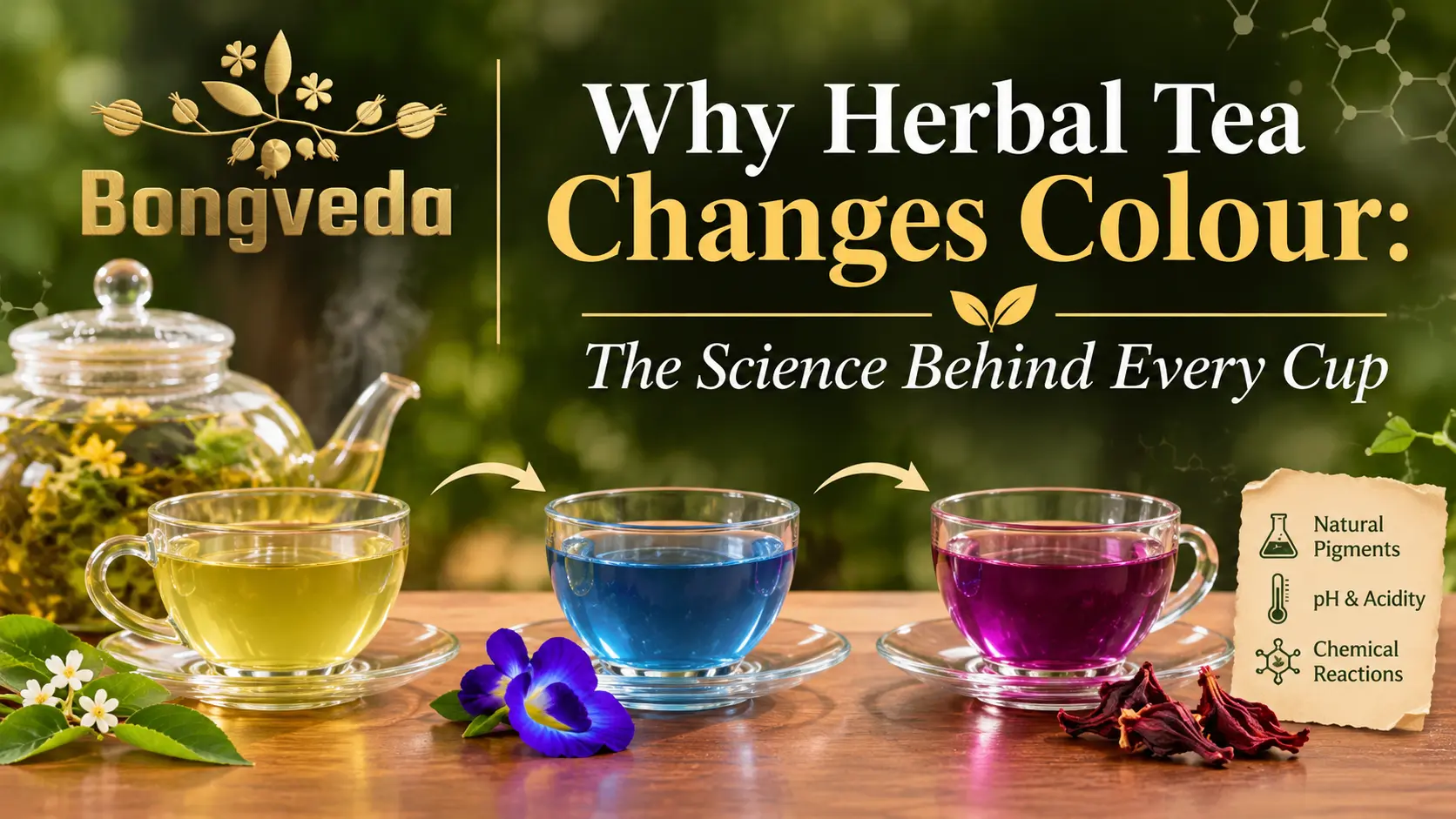
That gap is what makes herbal tea colour so interesting. The shade in your glass is a visible trace of what the plant is made of, how easily those compounds dissolve in water, and how the infusion was prepared.
In this guide we look at the natural pigments behind the colour of herbal tea, why roselle is red and chamomile is golden, what water temperature and steeping time do, and why colour alone is a poor way to judge quality. There is also a simple home activity so you can watch it all happen yourself.
Why Different Herbal Tea Ingredients Produce Different Colours
Herbal infusions are made from flowers, calyces, leaves, roots, bark and seeds. Each plant part carries its own mix of natural compounds. The main pigment families you will hear about are:
- Anthocyanins: water-soluble pigments behind many of the reds, purples and blues in flowers and fruit. Roselle is a well-known example.
- Carotenoids: yellow-to-orange pigments, as in carrots and marigold petals. They are largely fat-soluble, so they tend to contribute less in a water-based infusion.
- Chlorophylls: the green pigments of leaves. They are also fat-soluble and sensitive to heat and acidity, which is one reason leafy infusions are rarely a vivid green.
- Flavonoids and other polyphenols: a large group. Some are pale yellow, and others, along with their browning products, can add amber and brown tones.
Not every herb follows the same rules. A single plant can contain several pigments at once, and the final colour depends on the botanical material, how it was dried and stored, and the brewing conditions. No single compound explains every cup.
The Science Behind Ruby-Red Roselle Tea
Roselle (Hibiscus sabdariffa) tea is usually made from the fleshy calyces, the cup-like structure that surrounds the flower’s seed pod. Its red colour comes largely from anthocyanins. Research on roselle calyces identifies delphinidin-3-sambubioside and cyanidin-3-sambubioside as the two main ones, with smaller amounts of glucoside forms [1][4].
What makes anthocyanins special is that their colour is not fixed. It shifts with acidity. In a laboratory study of the main roselle anthocyanins, at the natural pH of a hibiscus extract they exist mainly in a red form, in balance with purple and colourless forms [2]. Another study of roselle extract in buffer solutions saw the colour move as pH changed [5]. Roselle calyces are naturally acidic, which helps explain why the infusion is red rather than purple.
Two cautions. First, the tartness of roselle tea is a separate sensory trait from its colour. Second, a rich red does not prove freshness, purity, quality or any health benefit. It simply tells you anthocyanins were extracted.
If you are new to the plant, our guide What Is Roselle Tea? Complete Guide for Beginners covers the basics.
Why Chamomile Tea Often Looks Golden
Chamomile infusions usually appear pale yellow, golden or warm amber. Chamomile flowers are rich in flavonoids, and apigenin and its glycosides are among the main ones. In chamomile infusions these compounds tend to be water-soluble [6][7]. Flavonoids of this kind are often yellowish, so they likely contribute to the golden cup, though research has not mapped exactly which compounds account for which part of the colour.
The shade you get can vary with:
- Ingredient quantity: more flowers per cup generally means a deeper tone.
- Brewing duration: a short steep looks lighter than a long one.
- Water temperature: it affects how quickly compounds dissolve.
- Botanical composition: a study comparing chamomile populations found noticeably different levels of apigenin derivatives between samples [6].
- Preparation method: whole flowers, broken flowers and tea-bag fannings behave differently.
Greenish, Brown, Amber and Other Herbal Tea Colours
Herbal tea colour variations are wide, and the examples below are general tendencies rather than fixed rules:
- Peppermint: usually pale yellow to light greenish-gold, as its delicate leaves release colour gently.
- Lemongrass: often a pale yellow or light golden-green.
- Ginger: from pale yellow to deeper golden amber, depending on whether it is sliced, dried or powdered.
- Tulsi: light golden-green to brownish, depending on the leaves used and the steeping.
- Cinnamon: a warm amber to reddish-brown, as bark is rich in polyphenols that deepen in colour.
Blends add another layer. A multi-ingredient blend can look quite different from any of its components, because the pigments and compounds combine. A red roselle base with cinnamon or ginger, for instance, may read as a deeper, browner red than roselle alone. For a closer look at what goes into the cup, see Herbal Tea Ingredients Explained.
How Water Temperature Influences Herbal Tea Colour
Hotter water generally helps compounds dissolve faster, but the outcome depends on the ingredient, so it is not a simple rule.
Studies show how mixed the picture is. In black tea, colour compounds and caffeine were extracted at different relative rates at different temperatures [8]. In mallow petal tea, cold brewing gave higher phenolic content, while long hot brewing partly degraded heat-sensitive compounds [9]. For hibiscus, one comparison found hot infusion extracted more anthocyanins, while another found cold extraction caused less colour degradation but took about 15 times longer [10][11]. Roselle anthocyanins also degrade faster with heat in low-acid conditions, but hold their colour better in acidic ones [3].
The practical takeaway: hotter is not always darker or better. A cup’s colour reflects the balance between extraction and degradation for that particular ingredient.
Why Steeping Time Can Change the Appearance of Herbal Tea
Extraction is gradual. Pigments and other soluble compounds move from the plant into the water over time, so:
- A short steep usually looks lighter.
- A longer steep can look more intense, up to a point.
- Delicate ingredients such as petals and thin leaves release colour quickly.
- Tougher ones such as bark, roots and whole calyces need longer.
- Very long hot steeping can alter or break down some compounds [9], so the effect varies from one ingredient to another.
Colour also tells you little about taste. A deeper cup can taste harsher or more bitter with some ingredients, so look at the glass and taste it too.
Does Darker Herbal Tea Mean Better Quality?
No. Colour alone cannot reliably tell you about quality, purity, freshness, organic status, nutritional value, potency or authenticity. Here is why:
- The plant varies. Roselle calyx colour ranges from light to intense red, and one study found it tracks anthocyanin content and even shifts with growing conditions such as water stress [1]. Two genuine batches can look different.
- Processing and storage matter. Drying, light, heat and air exposure can all affect pigments.
- Preparation matters. Quantity, time, temperature and even water chemistry change the cup.
- Blending matters. Added ingredients change the final colour.
- Eyes cannot detect everything. A vivid colour cannot tell you whether anything was added.
A better approach is to check the ingredient list for named plant parts (for example, roselle calyces), look for batch or best-before details and storage instructions, read the packaging carefully, and look for verified certifications where a brand claims them. If you are comparing options, you can explore different herbal tea varieties and read what each product page actually states.
Why Roselle Tea Can Display Different Shades of Red
Several things can move a roselle infusion from bright ruby to a deeper, darker or slightly purplish red:
- Amount of roselle used: more calyces generally deepen the colour.
- Brewing time: colour builds as steeping continues.
- Water temperature: hot and cold preparations can look different.
- The botanical material itself: calyx colour varies between cultivars and growing conditions [1].
- Lemon or other acidic ingredients: because anthocyanin colour responds to acidity, a squeeze of lemon may change the shade slightly. Roselle is already acidic, so the effect can be subtle.
- Other ingredients in a blend: spices and herbs add their own tones.
Different causes produce different shifts, so don’t assume every variation has the same explanation. A change in shade from one preparation to the next is not automatically a sign of poor quality. Our roselle tea benefits, uses, brewing and buying guide has more on preparation.
Experiment with Herbal Tea Colours at Home
This is a casual observation activity, not a laboratory experiment, but it is a fun way to see everything above for yourself.
You will need: three or four clear glasses, a kettle, a timer, a white sheet of paper as a backdrop, a lemon, and a notebook or phone for notes.
- Choose three or four herbal ingredients, such as roselle, chamomile, and peppermint or ginger.
- Put the same amount of each in separate glasses and add the same volume of hot water to each. Follow the pack’s brewing guidance and keep it consistent.
- Note the colour of each glass right away, holding it against the white paper.
- Check again at about 2, 5 and 10 minutes and record how the colour develops.
- Once they have cooled, compare the hot and cooled versions.
- Split the roselle infusion into two glasses and add a few drops of lemon to one. Compare the shades.
Write down what you see. Your results will depend on your ingredients, your water and your timing, and that variation is the point.
Frequently Asked Questions
Why does herbal tea change colour? Because different botanical ingredients contain different natural pigments and other compounds, and brewing conditions such as water temperature, steeping time and the amount used affect how much of them reach the water.
Why is roselle tea red? Roselle calyces contain anthocyanins, mainly delphinidin-3-sambubioside and cyanidin-3-sambubioside, and these pigments appear red in the naturally acidic infusion.
Does darker herbal tea mean it is stronger? Not reliably. Colour depends on the specific pigments an ingredient contains, not just on how much of it was extracted, so a darker cup is not proof of strength, quality or ingredient concentration.
Why does herbal tea become darker when steeped longer? Compounds dissolve gradually into the water, so a longer steep usually releases more colour. The effect varies by ingredient, and some compounds can degrade with prolonged heat.
Does adding lemon change roselle tea colour? It can. Anthocyanin colour responds to acidity, so lemon may shift the shade. Because roselle infusions are already acidic, the change can be subtle and depends on how the tea was prepared.
Can herbal tea have different colours without artificial colouring? Yes. Natural plant pigments such as anthocyanins, flavonoids and others can produce a wide range, from pale yellow to deep ruby and brown.
Does the colour of herbal tea indicate its quality? No. Colour cannot establish quality, purity or authenticity on its own. Check the ingredient list, packaging, storage information and any verified certifications instead.
Conclusion
The colour of herbal tea is a small window into what is in the cup and how it was made. It reflects the ingredients, their natural pigments, the water, the time and a few other factors, and no single one tells the whole story.
The best way to appreciate it is to experiment: brew a few botanicals side by side and notice how the colours, flavours and aromas differ. If you would like a striking example to start with, try ruby-red roselle tea, or browse Bongveda’s wider range of herbal infusions on the herbal tea page.