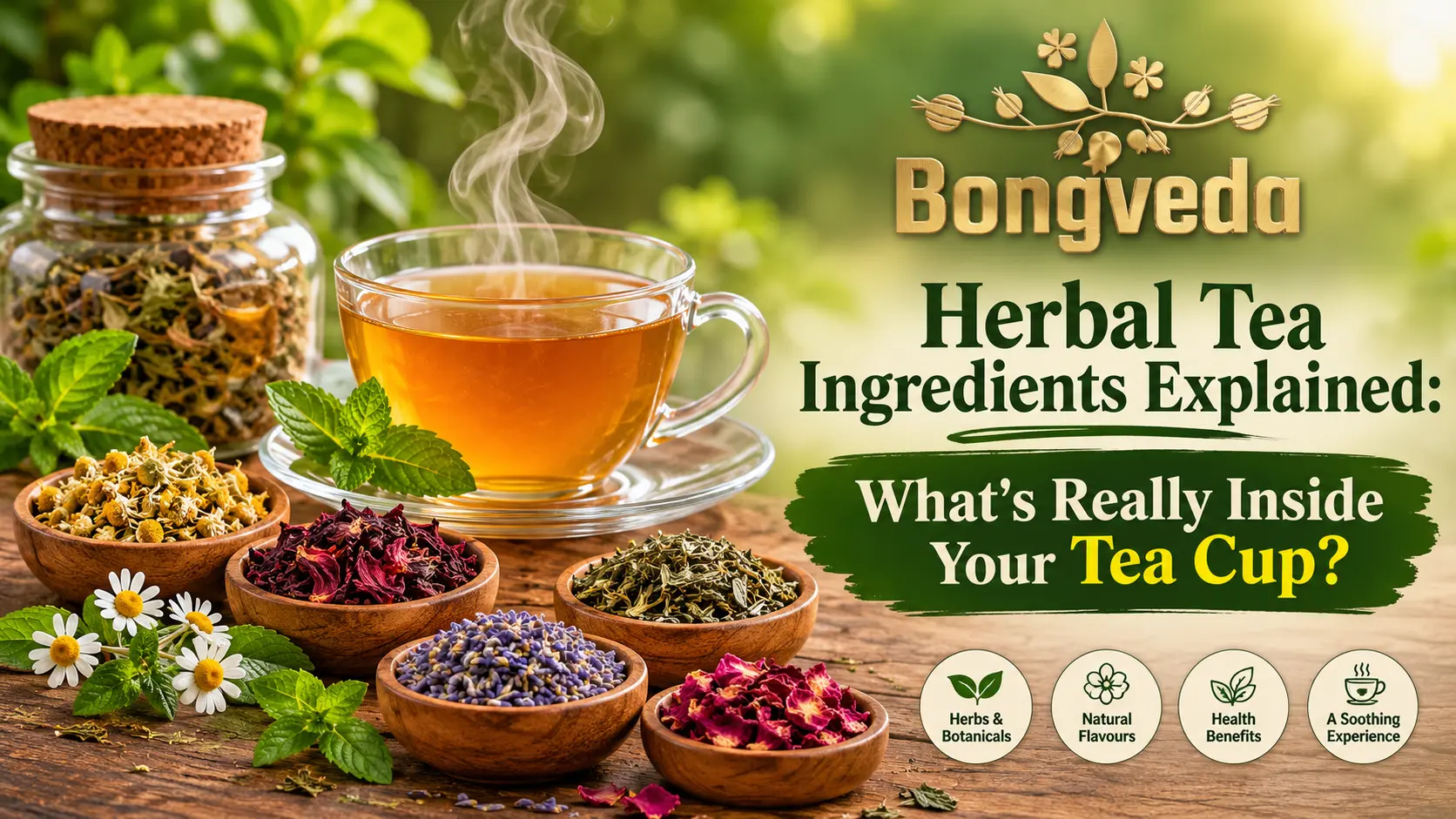
Pick up two boxes of herbal tea and you may find two very different worlds. One holds dried flower petals, the other a mix of roots, bark and seeds. Neither contains a single traditional tea leaf, yet both are sold as "tea".
That is what makes herbal tea ingredients so interesting. Each botanical brings its own colour, aroma and taste to the cup, and the ingredient list tells you far more about what you will be drinking than the name on the front of the pack.
This guide walks through the ingredients you will most often meet, what they taste like, how blends are put together and how to read a label with confidence. If you would like to browse while you read, you can explore organic herbal tea from Bongveda.
What Are Herbal Tea Ingredients?
Traditional tea, whether black, green or white, comes from one plant: Camellia sinensis. Herbal tea is different. It is usually an infusion, made by steeping plant material other than tea leaves in hot or cold water. That is why many people call it a herbal infusion or tisane.
Because any suitable botanical can be used, the range is wide. Common plant parts include:
- Leaves, such as mint or lemongrass
- Flowers, such as chamomile
- Roots, such as ginger
- Fruits, including dried fruit pieces and fleshy calyces
- Seeds, such as fennel or coriander
- Bark, such as cinnamon
- Spices, such as cardamom, clove or black pepper
Each part releases different compounds into the water, which is why a flower infusion tastes nothing like a root infusion.
Common Herbal Tea Ingredients and Their Characteristics
Here is a practical herbal tea ingredients list, focused on how each one tastes and feels in the cup.
Roselle (Hibiscus sabdariffa)
Roselle tea is made from the fleshy calyces of Hibiscus sabdariffa, the cup-shaped part that surrounds the flower. It brews to a deep ruby red and has a naturally tart, cranberry-like flavour. It works equally well hot or served over ice.
If you are new to it, our beginner's guide, What Is Roselle Tea? Complete Guide for Beginners, covers the basics, and you can explore roselle tea directly.
Chamomile
Chamomile has a floral, softly sweet aroma and a gentle flavour that rarely overwhelms. That mildness is why it is popular on its own and as a base for blends with other herbs.
Peppermint
Peppermint brings a cool, fresh, clean flavour. It lifts a cup quickly and pairs easily with both sweet and spicy ingredients, which makes it a frequent blending partner.
Ginger
Ginger is spicy, sharp and warming. Sliced or crushed, it gives herbal beverages a bold, slightly peppery edge. A little goes a long way, so steeping time matters.
Lemongrass
Lemongrass smells and tastes like citrus without being sour. It is light, fresh and slightly grassy, and often used to add brightness to blends.
Tulsi
Tulsi, also called holy basil, is widely used in traditional herbal beverages across India. It has a distinctive aromatic character, a little peppery and herbal, with a clove-like note that many people recognise instantly.
Cinnamon
Cinnamon contributes a sweet-spicy aroma and a rounded warmth. Because it is bark, it releases flavour slowly and holds up well in longer steeps.
Every one of these ingredients changes the taste, aroma and overall experience of the cup, and that is the idea to keep in mind for everything that follows.
Single-Ingredient Herbal Tea vs Herbal Tea Blends
A single-ingredient herbal tea uses one botanical. You taste that plant clearly, which makes it a good way to learn what you actually like. A pure roselle infusion or a plain peppermint tea are typical examples.
A herbal tea blend combines several ingredients. Brands blend for different reasons: to balance a strong flavour, to add aroma, to create a signature taste or to make a drink feel more rounded.
A few things are worth knowing:
- Blending changes both flavour and aroma. A tart ingredient softened by a sweet spice tastes very different from either alone.
- A blend may contain herbs, spices, fruits or even conventional tea leaves, depending on how it is formulated.
- The name on the pack does not always list everything inside, so the ingredient list is the reliable source.
If you are weighing the two styles using roselle as an example, our article on pure roselle tea vs blends goes into the trade-offs in detail.
How Herbal Tea Ingredients Influence Flavour
It helps to think of ingredients as flavour families:
|
Flavour profile |
Example ingredients |
|---|---|
|
Tart and fruity |
Roselle, dried berries, citrus peel |
|
Floral and delicate |
Chamomile, rose petals, jasmine |
|
Minty and refreshing |
Peppermint, spearmint |
|
Spicy and warming |
Ginger, cinnamon, clove, cardamom |
|
Citrus-like and fresh |
Lemongrass, lemon balm, lemon peel |
|
Earthy and mild |
Tulsi, fennel, some roots and seeds |
In a blend, the final taste depends on the combination of ingredients, their proportions, how they are prepared and how long they steep. The same mix can taste gentle after three minutes and sharper after seven.
How to Read an Herbal Tea Ingredients List
The back of the pack is where the real information sits. Here is what to look at:
- Ingredient names. Look for clear, specific names rather than vague terms like "herbal mix".
- Botanical names. Where given, names such as Hibiscus sabdariffa remove any confusion between similar plants.
- Single ingredient or blend. One item on the list means a single-ingredient infusion; several mean a blend.
- Added flavours. Look for words such as "flavouring" or "natural flavour".
- Sweeteners. Some products include sugar or other sweeteners.
- Caffeine-containing ingredients. Green tea, black tea and some other plants can add caffeine.
- Ingredient order. In many places, ingredients are listed from largest to smallest quantity, where that rule applies.
- Instructions and storage. Brewing guidance and storage notes show how the product is meant to be handled.
Not every product sold as herbal tea is caffeine-free. A blend that includes green or black tea leaves can contain caffeine, so the composition matters more than the marketing name. If you are curious about how a herbal infusion differs from a true tea, see our comparison of roselle tea vs green tea.
Natural Ingredients vs Added Flavours in Herbal Tea
Some herbal teas get all their taste from the botanicals themselves. Ginger tastes of ginger because ginger is in the cup. Others rely partly on added flavouring to create a particular profile, such as vanilla or a fruit note.
Why does this matter? A name like "berry blossom" describes a flavour, not necessarily the ingredients. Two products with the same name can be built very differently.
Added flavours are not automatically bad, and plenty of people enjoy flavoured infusions. The point is simply to know what you are buying. Check the ingredient list and any product information so the taste you expect matches what is inside.
How Herbal Tea Ingredients Work Together in a Blend
Tea makers think about balance: tartness against sweetness, aroma against freshness, mild against intense. Some illustrative combinations show how this works. These are general flavour pairings, not Bongveda product formulations:
- Roselle with citrus-oriented ingredients. The tartness of roselle and the brightness of citrus peel or lemongrass reinforce each other.
- Ginger with cinnamon. Sharp warmth meets sweet spice for a cosy, rounded cup.
- Mint with complementary botanicals. Mint's freshness can lift milder herbs or cut through richer spices.
- Floral ingredients with mild herbs. Chamomile or rose with a gentle herb keeps the cup soft and aromatic.
Good blending is about restraint. A strong ingredient can easily dominate, so the best blends let each element play a part.
What to Check Before Buying Herbal Tea
Use this quick checklist next time you shop:
- Ingredient transparency. Is the full list clear and specific?
- Ingredient variety. Is it a single botanical or a blend, and is that what you wanted?
- Product description. Does it match what the ingredient list shows?
- Organic certification, where claimed. If a product says organic, look for the certification detail on the pack or product page.
- Packaging. Is it sealed and intact?
- Storage instructions. Proper storage guidance suggests the seller has thought about how the product should be kept.
- Brewing recommendations. Water temperature and steeping time help you get the intended flavour.
- Added ingredients and flavourings. Know whether sweeteners or flavours are included.
- Caffeine information, where relevant. Especially for blends containing tea leaves.
Marketing language, such as "pure", "premium" or "natural", is a description. Verifiable product information, such as the ingredient list, certification details and instructions, is what you can actually check. Give more weight to the second.
For a deeper look at brewing and buying, our roselle tea benefits, uses, brewing and buying guide is a useful companion.
Frequently Asked Questions
What are the common ingredients in herbal tea?
Common ingredients include roselle, chamomile, peppermint, ginger, lemongrass, tulsi and cinnamon, along with other flowers, fruits, roots, seeds and spices.
Is herbal tea made from actual tea leaves?
Usually not. True tea comes from Camellia sinensis, while herbal tea is typically made from other botanicals. Some blends do combine the two, so check the label.
What ingredients are used in herbal tea blends?
Blends can include herbs, flowers, fruits, spices, roots and sometimes conventional tea leaves. The exact mix depends on the brand and the formulation.
Are all herbal tea ingredients naturally caffeine-free?
Many are, but not all products are. Blends containing green or black tea can contain caffeine. Always read the ingredient list.
What is the difference between herbal tea and herbal infusion?
The terms are often used interchangeably. "Herbal infusion" is the more precise term because the drink is made by steeping botanicals in water rather than using the tea plant.
How do I check the ingredients in herbal tea?
Read the ingredient list on the pack or product page. Look for specific names, botanical names where given, and any mention of flavourings, sweeteners or tea leaves.
Which herbal tea ingredients give tea a fruity flavour?
Roselle is known for its tart, fruity character, and dried fruit pieces or citrus peel also add fruitiness to blends.
Can herbal tea contain added flavourings?
Yes. Some products include added flavourings alongside or instead of botanical ingredients. The ingredient list will show whether they are used.
Final Thoughts
Herbal tea is a wide and varied category of botanical beverages, and the ingredients decide most of what you taste, smell and enjoy. Once you start reading ingredient lists and trying single botanicals, it becomes much easier to work out what suits you.
If you would like to keep exploring, Bongveda's herbal tea collection is a good place to look at different herbal tea varieties and discover herbal infusions at your own pace.